Central Park
Location
Highlands Ranch, Colorado
Project Stats
- 33 acres
- 11 acres commercial use
- 63,350 sf commercial
- 10 commercial buildings
- 3-acre park
- 19 acres residential use
Project Team
- AzTec Consultants
- Belfay Engineering
- CDI Services
- Howell Construction
- RATIO Architects
- SAGE Design & Build

 Infill
 Commercial
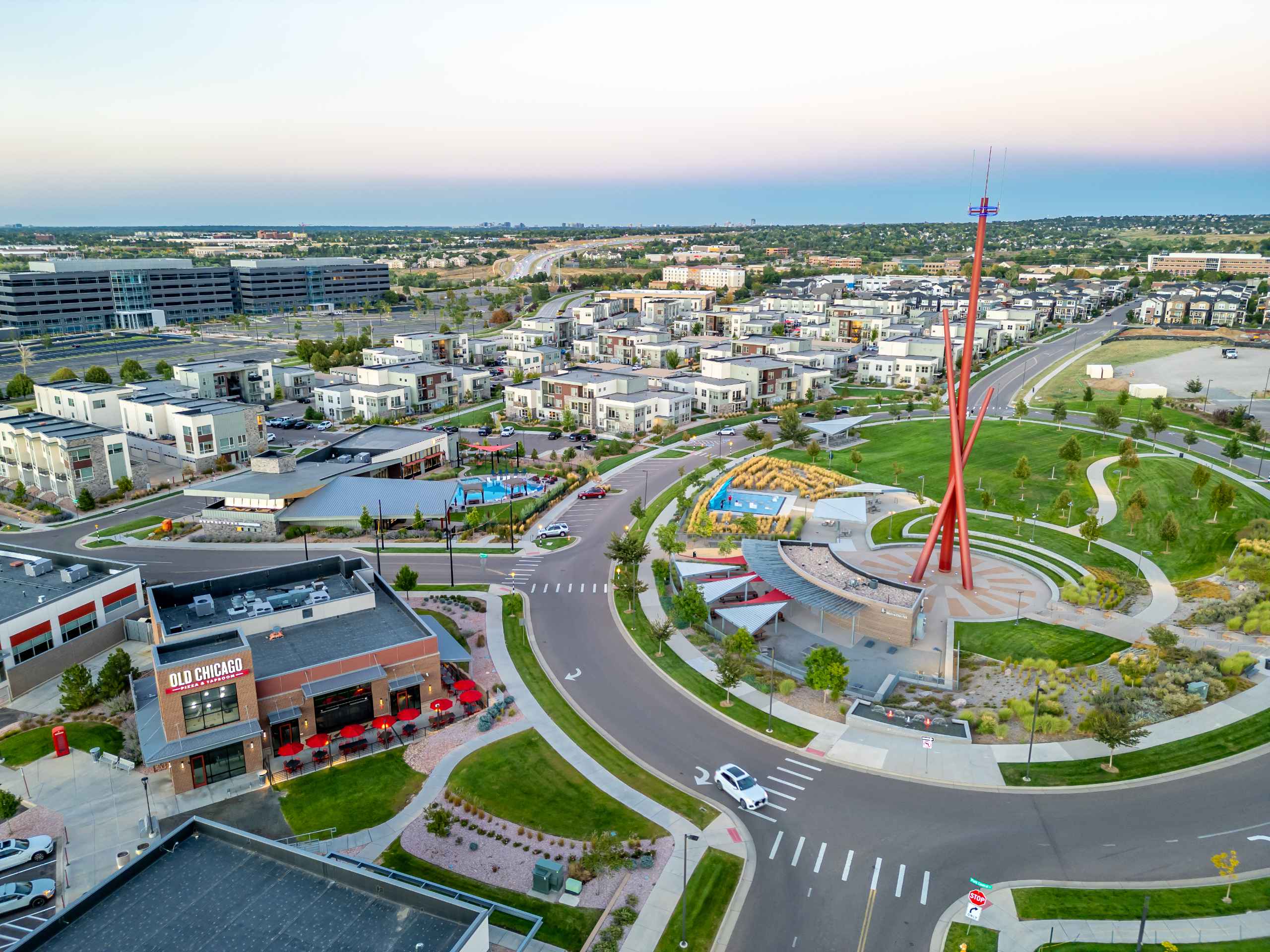
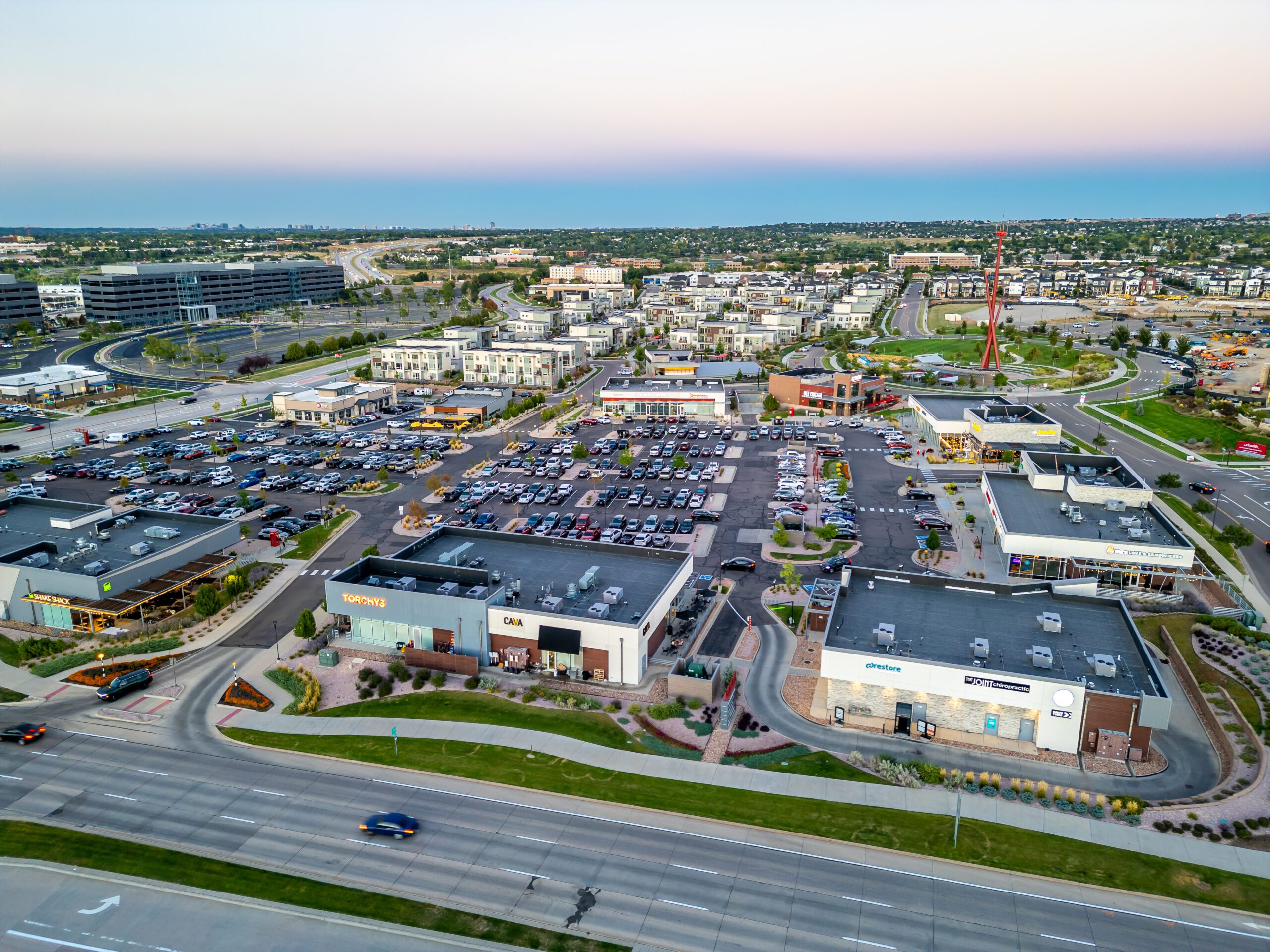
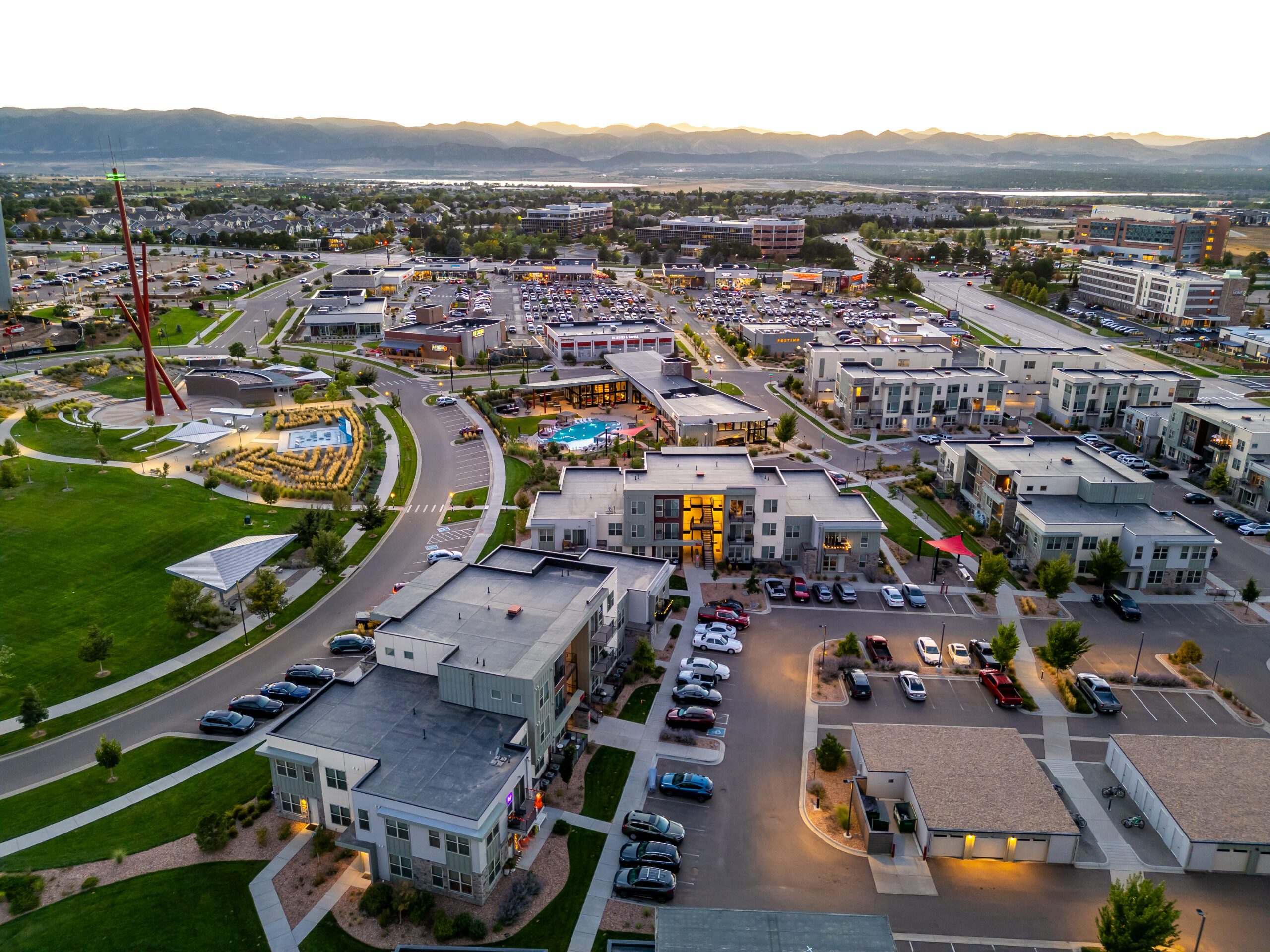
Central Park is a 33-acre commercial and residential development in Highlands Ranch, Colorado. Located near C-470 and within walking distance of two major medical centers, the project brings welcome retail, open space, and the Chroma Apartments to the area, transforming a long-undeveloped infill site into a central and walkable gathering place.
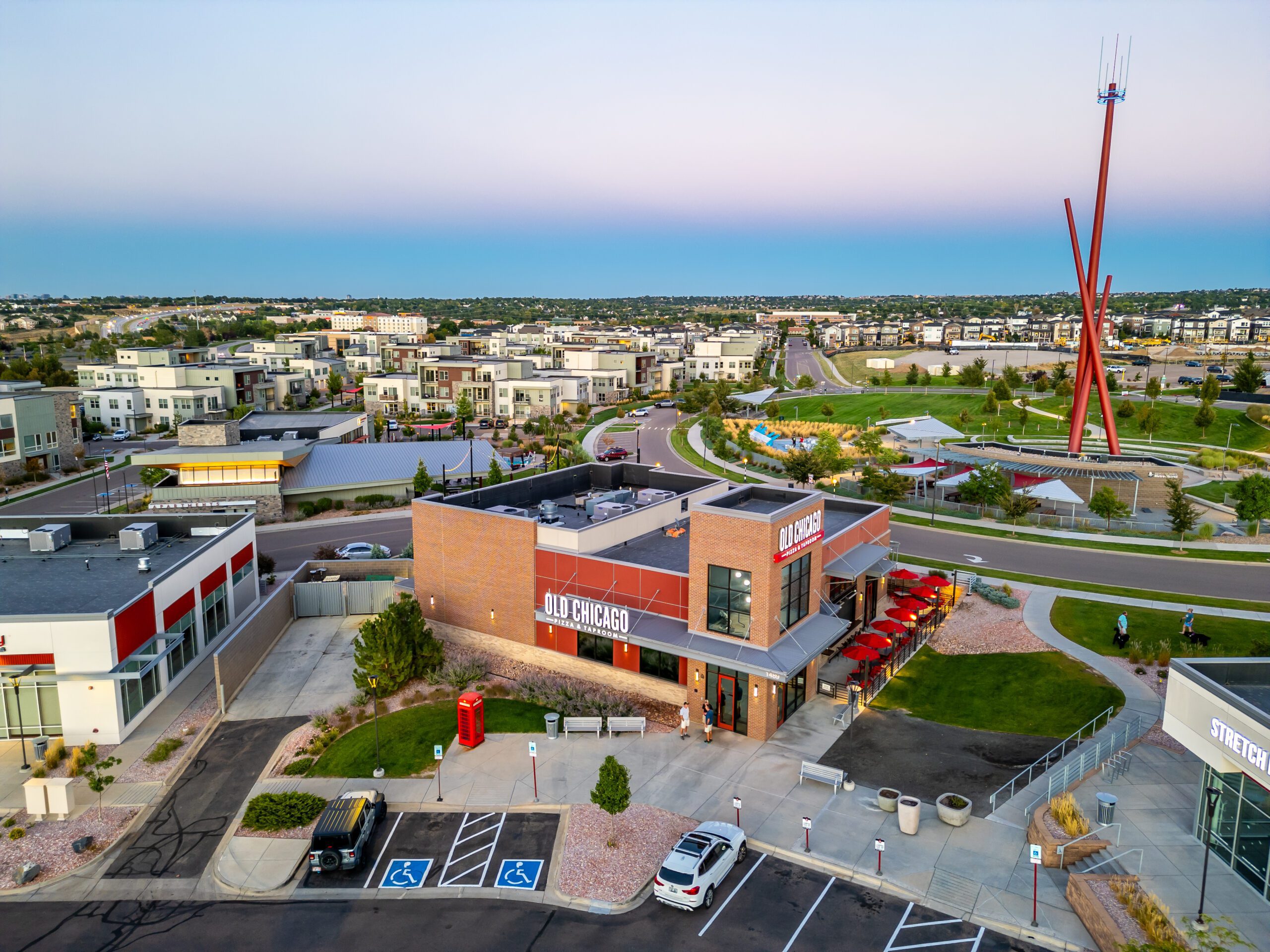
The retail village is lined with restaurants and shops featuring patios, sidewalks, and active storefronts. Old Chicago and Rock Bottom Brewery are among the destinations that draw people throughout the day. Central Park sits just beyond the retail buildings, offering lawn space, seating, a beer garden, and a fountain area where people come together or step outside during the workday. A 150-foot-tall architectural communications tower serving the Douglas County Sheriff’s Office acts as a visible beacon, orienting visitors and giving the development a recognizable point of identity. Subtle English-themed elements, including Beatles-inspired street names and Belisha-style pedestrian crossings, add character across the site.
Redland provided Civil Engineering services for Central Park, with Land Planning conceptual work upfront and Landscape Architecture for Postino wine cafe within the retail village. The team worked closely with the project partners to navigate the site’s grading, access, and infrastructure demands. The sloped site required grading and accessibility coordination across the retail village, park, and surrounding development, along with integration of utilities and parking. Redland coordinated with multiple stakeholders, including the Douglas County Sheriff’s Department and the Highlands Ranch Metropolitan District, and supported the Site Improvement Plan process and construction administration, helping translate the vision into a buildable framework that could grow over multiple phases.